


Intermittent Fasting: Does It Actually Work? Here's What the Science Says
We reviewed 9 scientific studies published between 2025 and 2026 to give you a straight answer — which benefits have real evidence behind them, and which ones still need more research.
INTERMITTENT FASTING
Nuri El azem De haro
5/23/20266 min read


You've probably heard of intermittent fasting. Maybe someone in your life swears by it, you've seen it all over social media, or you've spotted it in a health magazine. But with so much information out there — and so many conflicting opinions — it's hard to know what's actually true.
So we did the homework for you. We reviewed nine scientific studies published very recently — between 2025 and 2026 — covering thousands of real cases. These aren't one-off experiments: they're meta-analyses and systematic reviews, meaning they pool the results from dozens or even hundreds of previous studies. That's the gold standard in nutrition science.
The short answer: intermittent fasting works — but with some important nuances. Here's the full picture.
What exactly is intermittent fasting?
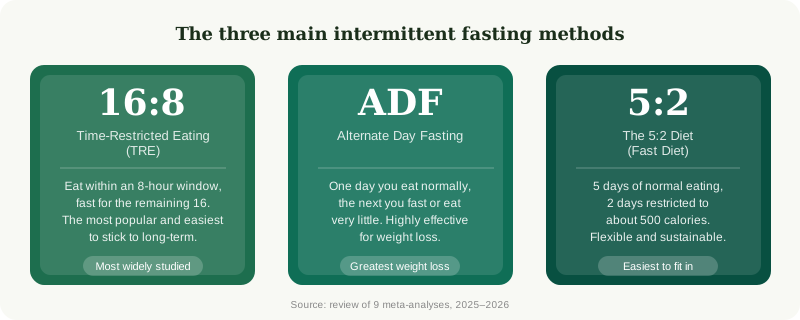
Intermittent fasting isn't a traditional diet. It doesn't tell you what to eat — it tells you when to eat. The idea is to alternate between periods of eating and periods of fasting (or eating very little). There are three main variations that scientists have studied most extensively:
The three main methods
The most popular and approachable option is the 16:8: you eat within an 8-hour window (say, noon to 8 p.m.) and fast for the remaining 16 hours. In practice, it usually just means skipping breakfast or having an early dinner. A lot of people already do this without realizing it.
What actually happens in your body when you fast?
After several hours without food, your body burns through its glucose stores (glycogen) and starts breaking down fat for fuel. In the process, it produces molecules called ketone bodies, which serve as an alternative energy source for your brain and muscles. This "metabolic switch" improves insulin sensitivity and helps your body manage blood sugar more efficiently.
Fasting also triggers a process called autophagy — literally, your cells start "cleaning house," breaking down damaged or dysfunctional components and recycling them. Think of it as a cellular maintenance program. This is thought to be behind some of the anti-inflammatory and anti-aging benefits seen in the research.4,5
Does it actually help you lose weight?
Here the answer is a clear yes. This is where the evidence is strongest and most consistent. Multiple meta-analyses confirm that intermittent fasting significantly reduces body weight in adults with overweight or obesity.1,2,3
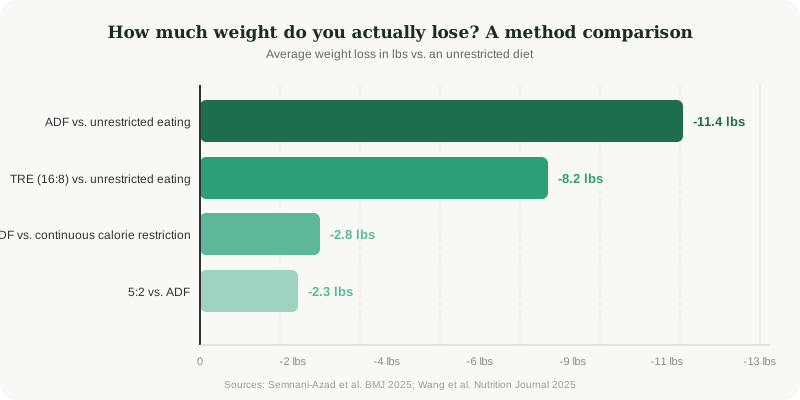
Average weight loss with each method (lbs)
The most effective method for weight loss turns out to be ADF (alternate day fasting), with an average reduction of 11.4 lbs compared to eating without restrictions. The popular 16:8 also shows solid results — around 8.2 lbs on average.2
But here's the most important caveat: intermittent fasting produces weight loss that's comparable to a traditional calorie-restriction diet. It's not some magic method that blows everything else out of the water. Its real advantage is that many people simply find it easier to stick to than counting calories every single day.
Good news on muscle loss: several studies confirm that the weight lost through intermittent fasting doesn't come from muscle. In adults over 60, the more moderate protocols achieved weight loss of between 4 and 5 lbs of fat without significant loss of lean muscle mass.6
What about your heart and metabolism?
Beyond the scale, the studies measured a range of markers closely tied to cardiovascular health and diabetes risk. The results are pretty encouraging:
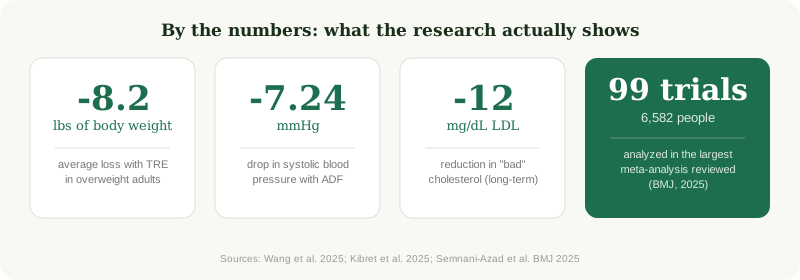
−1.4" reduction in waist circumference with ADF8
−7.24 mmHg drop in systolic blood pressure with ADF8
−12 mg/dL reduction in LDL "bad" cholesterol2
−0.60 units of insulin resistance (HOMA-IR)5
One important heads-up: in the short term (under 12 weeks), some studies found a temporary rise in triglycerides. However, in interventions lasting more than 12 weeks, that effect disappears and lipid levels improve. This suggests intermittent fasting has an adaptation period, and the metabolic benefits really consolidate over time.2
On the blood sugar front, a review of 8 clinical trials with 573 participants found significant reductions in fasting blood glucose, hemoglobin A1c (the long-term blood sugar control marker), and insulin resistance.5 Great news for anyone with metabolic syndrome or at risk for type 2 diabetes.
What about inflammation? This is where it gets interesting
Chronic inflammation is one of the driving forces behind many modern diseases — it's linked to diabetes, cardiovascular disease, cancer, and accelerated aging. Can intermittent fasting actually reduce it?
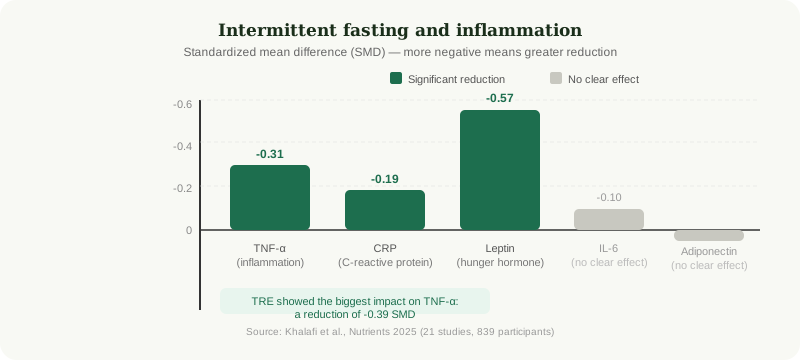
The answer is: partly, yes. The largest meta-analysis specifically focused on this question included 21 studies with 839 people and found significant reductions in three key inflammation markers.7
Effects of intermittent fasting on inflammatory markers
Leptin (the hormone tied to hunger and weight regulation) and TNF-α (a powerful inflammation mediator) showed the biggest drops. C-reactive protein (CRP) — a classic inflammation marker you'll see on a standard blood panel — also fell significantly.
What didn't change clearly: interleukin-6 (IL-6) and adiponectin. The researchers acknowledge that longer-term studies are needed to fully understand fasting's role in inflammation.7
What if you also work out?
Good news if you combine both: a meta-analysis of 12 studies with 616 participants showed that adding exercise to intermittent fasting meaningfully amplifies the results.9 Compared to fasting alone:
Fasting + exercise reduced body fat by an extra 2 lbs, waist circumference by an extra inch, LDL cholesterol by an extra 23 mg/dL, and improved cardiorespiratory fitness (VO₂max) by +1.92 ml/kg/min.9 Bottom line: if you're already fasting, adding movement to your routine makes the whole thing work significantly better.
Does intermittent fasting help you sleep better?
This one's less exciting. A meta-analysis of 18 clinical trials looked specifically at the effect of intermittent fasting on sleep quality in adults with overweight or obesity.10 The verdict: fasting did not significantly improve sleep, even though it did improve weight and metabolic markers. If your main concern is getting better sleep, intermittent fasting probably isn't the answer.
What about people over 60?
This is one of the groups where research is most limited — and where the findings deserve the most caution. The most recent review on this topic (published in 2026) analyzed 31 studies in adults aged 60 and older and found mixed results:6
What works
Weight loss without losing muscle
Improvements in blood pressure and metabolic markers
Cognitive improvements with long-term structured fasting
What's concerning
Very restrictive windows (≤10 hrs) were linked to lower cognitive scores
Prolonged fasts (>12 hrs) associated with 58% higher cardiovascular mortality risk
Very few clinical trials in this age group (only 7)
The takeaway for older adults: moderate protocols (like 16:8 with at least a 10-hour eating window) may be beneficial, but very long or very restrictive fasts don't appear to be safe for this group. And always — always — get medical supervision first.
So, is there enough evidence?
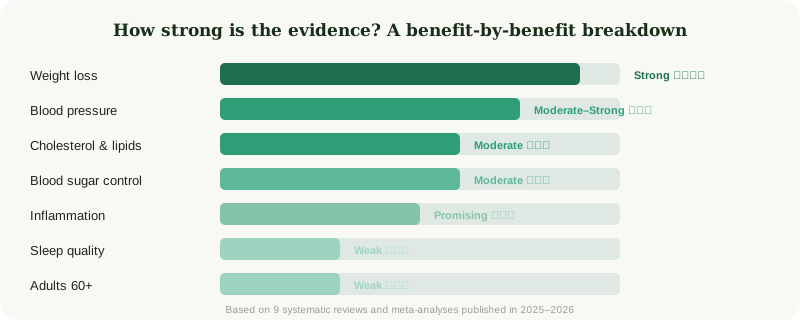
Strength of scientific evidence by health area
The most balanced conclusion comes from the largest meta-analysis in this review — published in The BMJ in 2025, covering 99 clinical trials and 6,582 adults:1 intermittent fasting produces benefits similar to a continuous calorie-restriction diet for weight and cardiometabolic risk. But we still need longer-term studies to know whether those effects hold up over years, not just months.
The bottom line: Intermittent fasting isn't a miracle — but it's not a myth either. The evidence for weight loss, blood pressure, and cholesterol is real and solid. The data on inflammation and blood sugar control is promising. Where science still has a lot of catching up to do is sleep, aging, and very long-term benefits. If you're thinking about trying it, moderate protocols (16:8 or 5:2) have the best safety profile. And if you have any pre-existing health conditions, always check with a healthcare professional before making major changes to how you eat.
References
Semnani-Azad Z et al. Intermittent fasting strategies and their effects on body weight and other cardiometabolic risk factors: systematic review and network meta-analysis of randomised clinical trials. BMJ 2025;389:e082007.
Wang B, Wang C, Li H. The impact of intermittent fasting on body composition and cardiometabolic outcomes in overweight and obese adults. Nutrition Journal 2025;24:120.
Zhang S et al. Effect of intermittent fasting on obesity and metabolic indices in patients with metabolic syndrome. BMC Endocrine Disorders 2025;25:130.
Yong YN et al. The effects of intermittent fasting on sleep quality and cardiometabolic health outcomes. Sleep Medicine Reviews 2025;84:102193.
Lu L et al. The effect of intermittent fasting on insulin resistance, lipid profile, and inflammation on metabolic syndrome. Journal of Health, Population and Nutrition 2025;44:293.
Couto-Alfonso S et al. Intermittent Fasting and Healthy Aging in Older Adults. Nutrients 2026;18:1450.
Khalafi M et al. The Effects of Intermittent Fasting on Inflammatory Markers in Adults. Nutrients 2025;17:2388.
Kibret KT et al. Intermittent Fasting for the Prevention of Cardiovascular Disease Risks. Current Nutrition Reports 2025;14:93.
Dai Z et al. Additional Effect of Exercise to Intermittent Fasting on Body Composition and Cardiometabolic Health. Current Obesity Reports 2025;14:54.